

Trial Balance Accounting: Examples and Best Practices
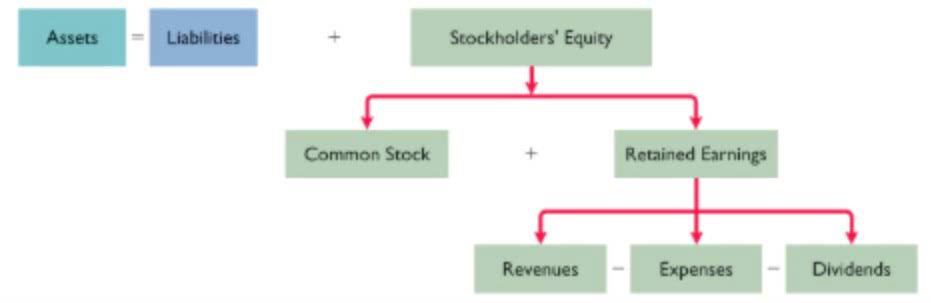
As a small business, you can improve your financial planning and performance by increasing the accuracy of your financial statements, empowering you to make better business decisions. T-accounts are often used to help visualize the debits and credits for each account. A trial balance is a list of all the accounts in the general ledger and their balances.
- By looking at the trial balance we can now identify that the wages expense account has a credit balance of 75.
- Accounting software like QuickBooks Online can handle the heavy lifting—posting transactions, generating trial balances, and keeping your records accurate behind the scenes.
- When the total debit and total credit of your trial balance is not balanced, the first thing you must check is if you’ve added all of the amounts in each column correctly.
- However, trial balances are still useful for accountants who need to check their work and for auditors who may need to understand which accounts to audit.
- By ensuring that total debits equal total credits, they demonstrate compliance with the fundamental principle of double-entry bookkeeping and maintain the integrity of financial records.
Post-closing
Notice that this trial balance only lists the permanent accounts in the balance sheet and does not contain the nominal or temporary accounts that are found in the income statement. The reason for this is that all of the income statement accounts have already been closed to the capital account for the period after the closing entries were posted in the general ledger. In addition to the income statement accounts, the drawing account Retained Earnings on Balance Sheet is also closed to the capital account. The three types of trial balances are prepared almost similarly from each other.
Transposition and Slide Error
Even though your journal entry is correct, there was still an error since you’ve posted the debit entry to the wrong account in the general ledger. Another possible computational error may happen as you compute for the total debit and credit columns of the ledger account level itself. This results in an inaccurate account balance that will be brought forward to the trial balance and cause the latter to be unbalanced. In addition to the above a trial balance will balance even if purposes, each type of trial balance also serves a specific purpose. For example, the unadjusted trial balance is used to show the general ledger account balances prior to any adjustments and corrections.

Posting Closing Ledger Balances into Trial Balance
A trial balance is an internal report that itemizes the closing balance of each of your accounting accounts. It acts as an auditing tool, while a balance sheet is a formal financial statement. The trial balance shows all of your accounting accounts, but a balance sheet may consolidate many of these accounts. In addition to the standard trial balance, businesses prepare adjusted and post-closing trial balances to ensure financial accuracy. Ensure that all trial balance accounts are posted to the general ledger as part of your review process.
- Since neither the debit nor the credit side is entered, the trial balance totals still match, which makes this type of error harder to spot.
- A trial balance is usually prepared at the end of an accounting period, such as month-end, quarter-end, or year-end, after all transactions for that period have been recorded.
- An unadjusted trial balance helps identify errors early, while an adjusted trial balance reflects all necessary adjustments, preparing the data for accurate financial reporting.
- If you’re using a dedicated bookkeeping system, all of this work is being done for you in the backend.
- Trial balances sum debits and credits, providing internal safe-checks and auditing bookkeeping practices.
- It is an excellent way of internally keeping an eye on the accurate recording of all accounting transactions.

A balance sheet is a financial statement that records a business’s assets, liabilities, and equity. It is one of the three fundamental financial statements that give a snapshot of a business’s debt obligations, cash and bank balances, deferred revenues, fixed assets at a specific point in time. For instance, in our vehicle sale example the bookkeeper could have accidentally debited accounts receivable instead of cash when the vehicle was sold. The debits would still equal the credits, but the individual accounts are incorrect.
Our AI-powered Anomaly Management Software helps accounting professionals identify and rectify potential ‘Errors and Omissions’ throughout the financial period so that teams can avoid the month-end rush. The AI algorithm continuously learns through a feedback loop which, in turn, reduces false anomalies. We empower accounting teams to work more efficiently, accurately, and collaboratively, enabling them to add greater value to their organizations’ accounting processes. For instance, if a business has to take a bank loan of $10,000 in cash payable within a year, it will add $10,000 in cash to the cash account and under the head “Current Assets” on the asset side. Simultaneously, it would need to add it as a “bank loan” under current liabilities on the liability side of the balance sheet to get both sides balanced. Trial balance is used to simply finish the next phase of preparing the balance sheet by aiding in the recording of the company’s income and expenses.
- The adjusted trial balance is what you get when you take all of the adjusting entries from the previous step and apply them to the unadjusted trial balance.
- In practice, the unadjusted trial balance serves as a starting point for accountants, helping to ensure that there are no obvious errors in the bookkeeping process.
- In addition check through the trial balance to see whether the amount is included but missed from the column additions.
- The books of accounts would then have to be examined to trace the source of the error.
- The balance sheet is derived from the trial balance and is used by external stakeholders, such as investors and creditors, to assess the company’s financial health.
- The trial balance is prepared after posting all financial transactions to the journals and summarizing them on the ledger statements.

The purpose of the trial balance is to test the equality between total debits and total credits after the posting process. This trial balance is called an unadjusted trial balance (since adjustments https://yloop.com/bookkeeping/an-example-on-how-to-prepare-a-statement-of-2/ are not yet included). It’s important to run a trial balance report and check it during the testing process of migrating from an existing accounting system to a new system that will replace it or add new functionality. The business needs to ensure that all accounts are mapped and included and will be posted to the general ledger.
